Scott Spivey Wrongful Death Case Intensifies as Weldon Boyd Faces Renewed Criminal Scrutiny
 James Seidel

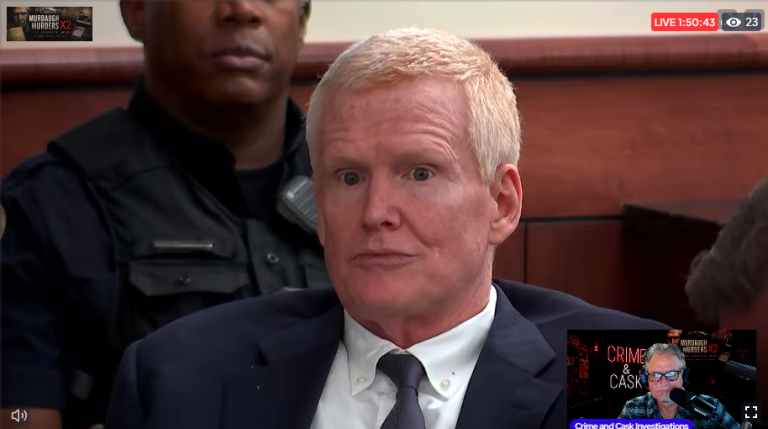
The deposition of Frank McMurrough, a witness the the shooting death case of Scott Spivey, is shown in court on the second day of the Stand Your Ground hearing for Weldon Boyd and Kenneth “Bradley” Williams on Wednesday. The hearing to be held over multiple days this week, will determine whether they will once again be granted immunity under South Carolina’s Stand Your Ground law for shooting and killing a North Carolina man nearly three years ago. Feb. 18, 2026.
Scott Spivey Wrongful-Death Case Intensifies as Weldon Boyd Faces Renewed Criminal Scrutiny
Boyd and Kenneth Williams sought to halt civil litigation as a state grand jury investigation, rejected stand-your-ground immunity claims, and allegations of police misconduct cast new scrutiny on the 2023 fatal shooting.
By James Seidel | CC News Network Investigative Desk
HORRY COUNTY, S.C. — More than three years after Scott Spivey was shot and killed during a roadside confrontation in Horry County, the legal battle surrounding his death is entering another consequential chapter.
Charles Weldon Boyd and Kenneth “Bradley” Williams, the two men who fatally shot Spivey on September 9, 2023, are facing continued wrongful-death litigation, renewed scrutiny of the original police investigation, and the possibility of criminal prosecution.
Both men maintain they acted in self-defense. Neither has been publicly confirmed as criminally charged in connection with Spivey’s death.
But the case has grown far beyond the original roadside encounter.
As CC News Network reported on November 9, attorneys for Boyd and Williams filed a motion on November 5 asking a Horry County judge to suspend the wrongful-death proceedings while a state grand jury investigation continues.
Their argument raises a significant constitutional issue: testimony compelled through civil discovery could potentially expose the defendants to criminal prosecution.
The request comes after a judge denied their claims of immunity under South Carolina’s stand-your-ground law, leaving the civil lawsuit moving forward.
Judge Orders Suspension
Now, that South Carolina judge has ordered a six-month suspension of the wrongful-death lawsuit against the two men who fatally shot Scott Spivey, as a State Grand Jury investigation raises the possibility of criminal charges in the controversial 2023 Horry County shooting.
Circuit Court Judge Eugene “Bubba” Griffith Jr. notified attorneys late last week that the civil proceedings would be stayed for 180 days, temporarily halting a lawsuit brought by Spivey’s sister, Jennifer Foley, against Weldon Boyd and Bradley Williams.
The ruling follows a motion filed by attorneys for Boyd and Williams, who argued that allowing the civil case to proceed while a criminal investigation remains active could jeopardize their clients’ constitutional rights against self-incrimination.
Foley’s attorney, Mark Tinsley, opposed the delay, arguing against further postponement of the family’s pursuit of justice.
Attorney Mark Tinsley, who represents Scott Spivey’s sister Jennifer Foley, (who has publicly attacked this journalist for standard reporting), has also maintained a close professional association with controversial podcaster Mandy Matney, a frequent commentator on South Carolina’s high-profile criminal and civil cases.
Matney, whose commentary frequently takes aim at conservative political figures and institutions, operates LunaShark Media and has been involved in public disputes arising from her wrong narrative coverage of the Murdaugh cases.
The relationship is particularly noteworthy because Tinsley has also been involved in the Beach v. Parker litigation, a separate legal dispute in which Matney has faced allegations concerning her media coverage.
That litigation included a transfer from Hampton County to Spartanburg County amid concerns about pretrial publicity and the ability to obtain an impartial jury.
Questions surrounding Matney’s alleged contempt of court, her reported departure from South Carolina, and an asserted outstanding $176,500 obligation require examination of the underlying court orders to establish their precise legal status.
Those issues are separate from the merits of the Spivey wrongful-death lawsuit, but they provide additional context concerning the attorneys and media personalities involved in South Carolina’s most closely watched legal disputes.
Both sides presented their positions during a November 11 hearing before Judge Griffith in Newberry.
The decision comes amid mounting scrutiny of the fatal shooting, the Horry County Police Department’s handling of the original investigation, and questions about whether the State Grand Jury will ultimately seek criminal indictments.

A Stand Your Ground hearing is being held this week for Weldon Boyd, owner of Buoys on the Boulevard, and Kenneth “Bradley” Williams in the shooting death of Scott Spivey. Boyd and Williams have been named in a wrongful death lawsuit by the Spivey family in his shooting death nearly three years ago. The hearing will determine if the the pair are granted immunity under South Carolina’s Stand Your Ground law. Feb. 18, 2026.
A State Grand Jury Investigation Raises the Stakes
The South Carolina state grand jury investigation became public in February 2026, initially drawing attention to allegations of misconduct involving the Horry County Police Department.
However, the latest defense filing suggests the investigation may reach beyond the officers who handled the shooting.
According to the November 5 motion, defense attorneys initially understood that the grand jury was investigating possible law-enforcement misconduct. They subsequently received information suggesting Boyd and Williams themselves could be subjects of the inquiry.
The filing does not publicly identify the sources of that information, and prosecutors have not confirmed whether criminal charges are being considered against either man.
Nevertheless, Boyd and Williams now argue that continuing civil discovery could force them into a difficult choice: answer questions under oath that might later be used in a criminal case, or invoke their Fifth Amendment rights against self-incrimination.
Their attorneys want the wrongful-death proceedings paused while the criminal investigation remains unresolved.
For Spivey’s family, another delay could mean additional months of litigation without a final determination of civil responsibility.
Judge Rejects Stand-Your-Ground Immunity
The defendants have already suffered significant setbacks in their efforts to obtain immunity from prosecution and civil liability.
Following a four-day hearing in February 2026, Circuit Court Judge Eugene Griffith denied Boyd’s request for immunity under South Carolina’s Protection of Persons and Property Act.
Williams was also denied immunity in a subsequent written order.
The rulings followed extensive testimony concerning the events leading to Spivey’s death, the defendants’ actions, and whether the circumstances justified the use of deadly force.
The defendants sought reconsideration, but Griffith declined to change his rulings in August.
Those decisions did not establish that Boyd or Williams committed a crime. They also did not eliminate their ability to argue self-defense in subsequent proceedings.
They did, however, deny the statutory immunity the men had sought.
That distinction is now particularly important as the possibility of renewed criminal proceedings looms over the civil case.

What Really Happened on September 9, 2023?
Spivey, 33, was killed on Camp Swamp Road in the Longs area of Horry County after a confrontation involving Boyd, a North Myrtle Beach businessman, and Williams, who was traveling with him.
Evidence discussed during the litigation established that Spivey was armed and intoxicated and had displayed a firearm during the events preceding the shooting.
Boyd and Williams contend that Spivey posed an immediate deadly threat when Spivey waived a handgun at people and that they fired to protect themselves when they allege Spivey rose his arm as if to shoot at them.
Spivey’s family disputes whether the shooting was legally justified, pointing to the conduct of the defendants before the fatal encounter.
At the February 18, 2026, stand-your-ground hearing, Dr. Angelina Phillips, the MUSC forensic pathologist who performed Spivey’s autopsy, testified that:
-
The fatal bullet entered the right side of Spivey’s back, near his armpit.
-
The bullet traveled from right to left and somewhat forward through his chest.
-
The wound’s location and trajectory suggested Spivey’s right arm was raised or positioned away from his torso.
- If his arm had been hanging against his body, the bullet likely would have struck his triceps first. The defense used that testimony to argue that Spivey could have been raising his gun toward Boyd and Williams.
Under South Carolina law, the circumstances leading to a confrontation can be important in determining whether a person qualifies for immunity under the stand-your-ground statute.
The central legal question is not merely whether Spivey possessed a weapon, he did. It’s whether Boyd and Williams satisfied the requirements for the use of deadly force under the circumstances.
Those questions remain unresolved in the underlying civil litigation.
The Police Investigation Under Scrutiny
One of the most controversial aspects of the Spivey case involves the conduct of Horry County police personnel following the shooting.
CC News Network has previously reported on body-camera footage showing former Horry County Police Sgt. Paul Vescovi displaying a handwritten message to Boyd and Williams.
The message read:
“Act like a victim. Camera.”
The footage raised questions about why an officer involved in the investigation would communicate such an instruction to individuals who had just participated in a fatal shooting.
Vescovi was subsequently fired.
Former Horry County Deputy Chief Brandon Strickland also came under scrutiny because of his relationship and communications with Boyd.
Recorded telephone conversations between the two men following the shooting became part of the evidence considered during the immunity proceedings.
Strickland resigned amid misconduct allegations. CC News Network has also reported on a polygraph examination in which Strickland disputed allegations concerning his conduct.
Separately, an internal police investigation identified problems involving seven dashcam recordings associated with the Spivey investigation.
The recordings had been improperly handled or mislabeled, according to the findings described in CC News Network’s earlier reporting.
Those issues prompted additional scrutiny of evidence handling and the integrity of the original investigation.
Whether any of those irregularities amounted to intentional misconduct remains a separate question from whether the shooting itself was justified.
Federal Civil-Rights Lawsuit Alleges a Cover-Up
The controversy expanded further with a federal civil-rights lawsuit alleging that Horry County law-enforcement personnel improperly protected Boyd and Williams following the shooting.
As CC News Network reported in September, the 44-page complaint accuses current and former police officials of manipulating evidence, influencing witnesses, concealing information, and steering the investigation toward a self-defense conclusion.
Those allegations have not been established as facts by a court.
However, the lawsuit places the conduct of law enforcement under independent scrutiny, separate from the wrongful-death claims against Boyd and Williams.
The federal litigation also raises broader questions about how police departments investigate fatal shootings when individuals involved have personal or professional relationships with law-enforcement officials.
Attorney General Orders Another Review
The South Carolina Attorney General’s Office previously declined to pursue criminal charges in the Spivey shooting, citing insufficient evidence.
That decision did not bring an end to the controversy.
In October 2026, Attorney General Alan Wilson asked Seventh Circuit Solicitor Barry Barnette to review the case and determine whether additional evidence warranted reconsideration.
The request represented another significant development in a case that had previously been treated as a justified shooting by the original investigators.
The renewed review, together with the state grand jury proceedings, has introduced uncertainty about whether the matter could ultimately result in criminal charges.
No indictment against Boyd or Williams has been publicly confirmed.

Why Boyd and Williams Want the Civil Case Stopped
The November 5 motion to stay the wrongful-death lawsuit illustrates the competing legal interests now confronting the defendants.
In civil litigation, parties can be required to provide documents, answer written questions, and submit to depositions.
But when the same underlying events are also being examined for possible criminal prosecution, testimony given in a civil case can create substantial risks.
Boyd and Williams argue that proceeding with discovery while the grand jury investigation continues could compromise their constitutional rights.
The Spivey estate, meanwhile, has an interest in pursuing its civil claims without unnecessary delay.
A judge considering the motion must weigh those competing interests.
The existence of a criminal investigation does not automatically require a civil case to be suspended.
Three Years Later, Accountability Remains Unresolved
The shooting death of Scott Spivey has now generated wrongful-death litigation, contested stand-your-ground proceedings, a federal civil-rights lawsuit, scrutiny of police misconduct, and renewed prosecutorial review.
At the center of those proceedings remains a fundamental disagreement over what happened on Camp Swamp Road and whether the deadly force used against Spivey was legally justified.
For Boyd and Williams, the stakes include potential civil liability and the possibility of criminal prosecution.
For Spivey’s family, the litigation represents an ongoing effort to obtain answers about his death and the investigation that followed.
And for the public, the case raises questions about the accountability of both the individuals involved in a fatal confrontation and the law-enforcement officials responsible for investigating it.
CC News Network will continue examining the court filings, the grand jury developments, and the evidence surrounding Scott Spivey’s death.
Previous CC News Network investigations:
- Weldon Boyd Asks Horry County Court to Pause Civil Case — November 9, 2026.
- Federal Lawsuit Alleges Horry County Police Conspiracy in Scott Spivey Case — September 11, 2026.
Source acknowledgment: Additional reporting on the Spivey wrongful-death litigation by The Post and Courier. Court developments and investigative background from CC News Network’s prior reporting.

Stay Connected with CC News Network
75 million+ social media views • 250,000+ followers across our platforms
Stay informed. Stay curious. Stay connected.
Watch & Listen
- The Murdaugh Murders Podcast – X2 — Join our Patreon community
- Listen on Spotify — The Murdaugh Murders X2 Podcast
- Watch the Podcast Trailer — On Spotify
- YouTube — @CrimeandCask
- Rumble — @CrimeandCask
- WVFF 97.7 FM — Radio coverage from Cottageville, South Carolina
- Music on Spotify — Crime and Cask / CC Records
- Crime and Cask Website
Follow Our Reporting
- Facebook — CC News Network
- TikTok — @CrimeandCask
- Instagram — @CrimeandCask
- X — @crimeandcask
- Bluesky — @ccnewsnetwork.bsky.social
- Lemon8 — Crime and Cask
Books & Personalized Videos
- Books on Amazon — Explore books by James Seidel
- Cameo — Book a personalized video
© 2026 Grayson & Mae, LLC. All rights reserved.
CC News Network and Crime and Cask are trade names of Grayson & Mae, LLC.
About the Author