James Seidel
Judge Denies Murdaugh Murder Indictment Dismissal Despite SLED Agent’s Failure to Account for Negative Blood Test
Court acknowledges inaccurate grand jury testimony, a previously undisclosed laboratory report, and investigative failures — but finds insufficient evidence of intentional misconduct to dismiss murder charges.
By James P. Seidel | CC News Network
November 20, 2026 | SOUTH CAROLINA
A South Carolina circuit court judge has refused to dismiss the murder indictments against Richard Alexander Murdaugh, despite acknowledging significant problems involving the testimony of a former South Carolina Law Enforcement Division investigator, a laboratory report finding no human blood in tested samples from Murdaugh’s shirt, and inaccurate statements concerning shotgun ammunition recovered from the family’s Moselle property.
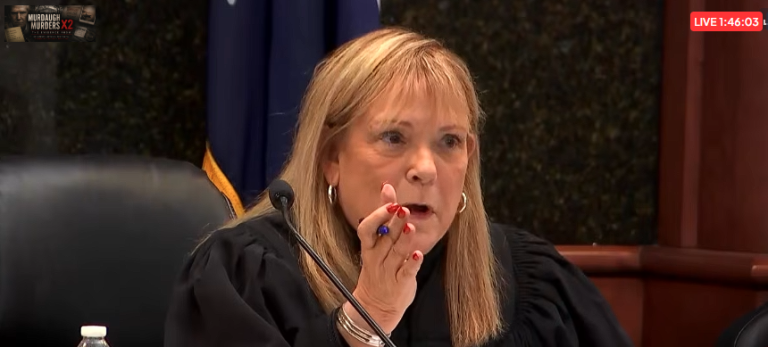
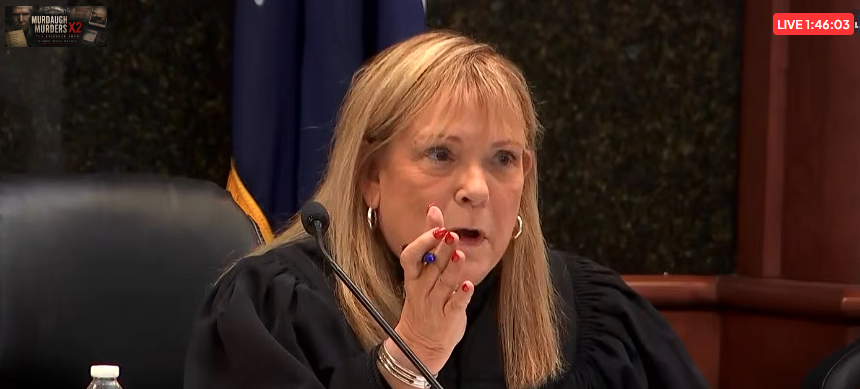
In an 11-page order signed Friday, November 20, 2026, Circuit Court Judge Debra R. McCaslin denied Murdaugh’s motion to dismiss the four indictments returned by a Colleton County grand jury in July 2022.
The decision clears the way for Murdaugh’s second murder trial, currently scheduled to begin April 5, 2027, in Sumter County.
But the ruling also documents a troubling sequence of investigative events involving former SLED Special Agent David Owen, the lead investigator whose testimony helped secure the original indictments.
Among the court’s findings:
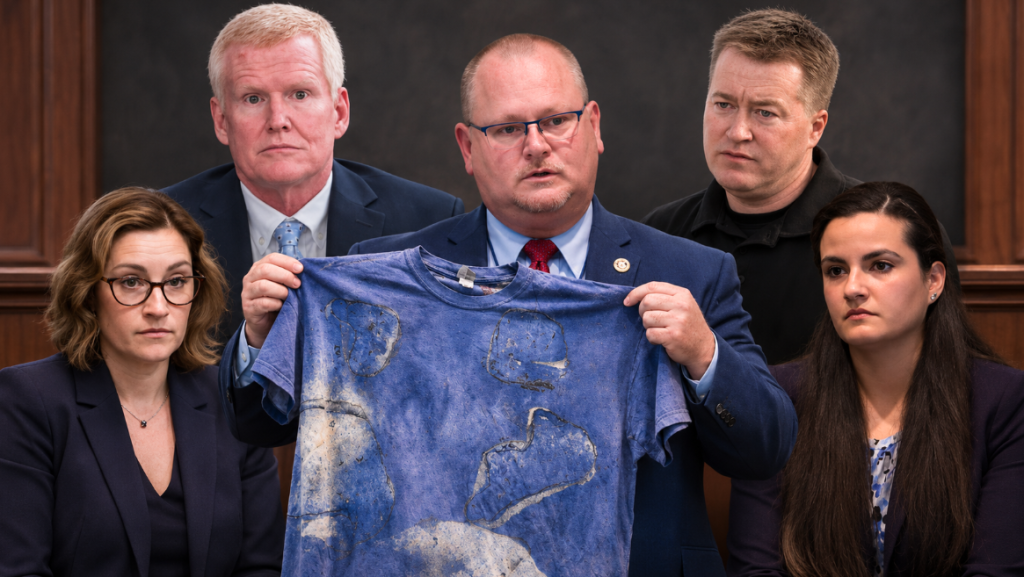
- A November 10, 2021, SLED laboratory report found no human blood in tested samples from Murdaugh’s white T-shirt.
- That report was addressed to Owen but was not downloaded by him or the Attorney General’s Office until November 30, 2022 — more than four months after the indictments.
- The report was not initially provided to the State’s outside bloodstain-pattern expert, Tom Bevel.
- Owen’s testimony concerning the presence of blood spatter on the shirt was challenged as misleading.
- Owen’s descriptions of shotgun ammunition recovered from the property were also inaccurate.
- The court found that Owen failed to account for a laboratory report addressed directly to him.
Despite those findings, McCaslin concluded that the defense had not established misconduct sufficiently serious to invalidate the grand jury proceedings.
The distinction is important.
The court did not determine that Owen’s challenged testimony was accurate. It determined that the evidence did not establish the degree of misconduct and prejudice necessary to dismiss the indictments.
That leaves unresolved questions about how SLED handled potentially exculpatory forensic evidence, what Owen knew when he testified, and whether the grand jury received an accurate presentation of the physical evidence.
A Laboratory Report That Existed Eight Months Before the Indictments
The dispute centers on the white T-shirt Murdaugh was wearing when investigators arrived at Moselle following the June 7, 2021, killings of his wife, Maggie, and son, Paul.
The State initially investigated whether markings on the shirt could establish that Murdaugh was physically present when one or both victims were shot.
Such evidence, if reliable, could have been particularly significant because it would potentially place him in proximity to a shooting rather than merely at the property sometime before the killings.
According to McCaslin’s order, Owen collected the shirt on June 8, 2021.
On June 25, a SLED laboratory report identified presumptive positive reactions for blood on cuttings taken from the bottom of the shirt.
In July 2021, SLED laboratory personnel treated the shirt with leucocrystal violet, commonly called LCV, a chemical used to visualize possible bloodstaining.
The resulting observations included possible spatter and transfer stains.
On July 25, 2021, a separate SLED laboratory report identified Maggie or Paul Murdaugh as DNA contributors on certain shirt cuttings.
However, another laboratory report, dated November 10, 2021, reached a critically different finding concerning the presence of human blood in the tested samples.
As the judge recounts on page 6:
“no human blood was identified”
That finding did not establish that every mark on the shirt was unrelated to blood. Nor did it necessarily invalidate every presumptive chemical reaction.
But it created a significant scientific question: How could investigators confidently characterize the markings as blood spatter from a shooting when confirmatory testing did not identify human blood in the samples examined?
The report existed months before Owen appeared before the Colleton County grand jury in July 2022.
Yet the court found that the document was not downloaded by Owen or the Attorney General’s Office until November 30, 2022.
The defense received it on December 2, 2022.
By then, the indictments had already been returned.
That chronology raises an important distinction between a document’s presence in a laboratory case file and its actual review by the investigators responsible for presenting evidence.
The report was not created after the indictments.
It was not a new scientific discovery.
It was an existing SLED laboratory finding that had not been accounted for during the grand jury presentation.
The Expert Initially Saw No Blood Spatter — Then Identified More Than 100 Stains
The court’s findings also detail the changing conclusions of bloodstain-pattern expert Tom Bevel.
According to the order, Bevel received SLED investigative materials on January 4, 2022.
Approximately one month later, he submitted a draft report that did not identify the presence of blood spatter.
Following additional discussions, a review of higher-quality photographs taken before LCV processing, and a physical examination of the shirt, Bevel changed his assessment.
He ultimately concluded that Murdaugh’s shirt contained more than 100 spatter stains.
The State relied on the expert’s revised conclusions when presenting the case to the grand jury.
The defense maintains that the change was significant because the expert was not initially provided the November 2021 laboratory report finding no human blood.
During the November 13 hearing, defense attorney Jim Griffin argued that the negative report was among the most important documents Bevel had not received.
Prosecutor Creighton Waters countered that Bevel continued to support his spatter interpretation after reviewing the previously omitted laboratory findings.
The judge’s order reflects the State’s position that LCV treatment could have contributed to a false-negative result in subsequent testing.
That explanation, however, was not independently resolved through an evidentiary determination in this order.
The court did not conduct a full trial of the scientific reliability of the bloodstain analysis.
Instead, it considered whether the discrepancies and the circumstances surrounding Owen’s testimony justified dismissal of the indictments.
That is a narrower legal question.
The scientific dispute remains available for examination during the retrial, subject to the court’s evidentiary rulings.
Judge Criticizes Owen’s Failure to Review Laboratory Evidence
Perhaps the most consequential portion of the order appears on page 7.
McCaslin explicitly addresses Owen’s failure to recognize and account for the November 2021 laboratory report before presenting testimony to the grand jury.
The judge describes law enforcement’s obligation to thoroughly review the evidentiary record and accurately represent it.
She also states that failures of this nature undermine public confidence in the criminal justice system.
That is a significant judicial criticism.
Nevertheless, the court concludes that Owen’s failure did not reach the level of misconduct necessary to justify dismissal.
On page 6, McCaslin explains that although the report was addressed directly to Owen, the record indicated he was unaware of its existence when he testified.
She further concludes that the evidence did not establish that Owen knowingly or willfully presented false evidence to the grand jury.
That conclusion is central to the ruling.
The court distinguishes between an investigator who deliberately misrepresents evidence and one who fails to recognize, retrieve, or account for evidence already contained in the investigative record.
But the distinction also creates an accountability question.
If a laboratory report is addressed to the lead investigator and contains information directly relevant to testimony he intends to provide, what responsibility does that investigator have to ensure the report has been reviewed?
And if the investigator fails to do so, should the consequences depend primarily on whether the failure was intentional?
McCaslin’s order answers the narrower question of whether the established conduct justified dismissal under the governing legal standard.
It does not fully resolve the broader question of investigative accountability.
The Court’s Findings Do Not Mean the Grand Jury Heard Accurate Evidence
The defense argued that Owen’s testimony improperly strengthened the State’s case by suggesting physical evidence connected Murdaugh to the shootings.
The State disputed that characterization, arguing that Owen testified consistently with the expert findings and investigative information available to him at the time.
McCaslin ultimately found insufficient evidence of deliberate fabrication or knowingly false testimony.
But she did not conclude that every challenged statement was correct.
On page 7, the judge characterizes the disputes as arising during an ongoing investigation in which forensic findings and expert opinions continued to develop.
The court also observed that the HemaTrace report contained inconclusive findings for certain stains and that DNA associated with Paul Murdaugh was identified in two lower-front shirt cuttings.
Those distinctions matter.
A negative human-blood test on particular samples does not automatically prove that no blood existed anywhere on the garment.
Likewise, the identification of DNA does not by itself establish that the DNA was deposited through blood spatter during a shooting.
The court’s ruling does not resolve those separate forensic questions.
What it does establish is that the defense failed to persuade McCaslin that the disputed evidence warranted the extraordinary remedy of dismissing the indictments.
The Shotgun Testimony: Another Inaccuracy Acknowledged
The T-shirt was not the only issue.
Murdaugh’s attorneys also challenged Owen’s testimony about shotguns recovered from the Moselle property.
The defense argued that Owen represented to the grand jury that shotguns found on the property were loaded with the same combination of buckshot and birdshot or turkey-shot ammunition used to kill Paul Murdaugh.
According to the defense, subsequent trial testimony and ballistic reports did not support that assertion.
McCaslin addressed the issue on pages 8 and 9.
The court acknowledged that Owen’s November 2021 grand jury testimony concerning the particular ammunition loads was inaccurate.
But the judge also noted that investigators recovered multiple firearms and various types of ammunition from the property.
Some recovered shotguns contained different combinations of ammunition, including buckshot, birdshot, and turkey loads.
The order makes another important finding: investigators had not recovered the family-owned Benelli 12-gauge shotgun or at least one .300 Blackout rifle.
McCaslin determined that the inaccurate descriptions of ammunition reflected confusion or imprecision rather than intentional fabrication.
That conclusion follows the same general reasoning applied to the T-shirt.
The testimony was challenged as inaccurate, but the court did not find that the inaccuracies established misconduct sufficiently serious to require dismissal.
For the defense, however, the significance of the ammunition testimony was not limited to whether different shells existed somewhere on the property.
The issue was whether Owen’s description suggested a more specific connection between recovered family firearms and the murder weapons than the evidence actually supported.
Those are materially different propositions.
The presence of assorted ammunition establishes one fact.
A firearm loaded in a configuration matching the murder weapon would potentially establish another.
The court concluded that the differences did not invalidate the indictments.
The underlying forensic distinctions remain relevant to how the evidence may be presented at trial.
Why the Judge Refused to Dismiss the Indictments
McCaslin relied heavily on South Carolina’s legal standards governing challenges to grand jury proceedings.
In particular, she discussed State v. Thrift, a 1994 South Carolina Supreme Court decision addressing the extraordinary circumstances under which prosecutorial misconduct can justify dismissal.
Under the standard described in her order, dismissal may be warranted when misconduct substantially influences a grand jury’s decision to indict or creates grave doubt that the decision was free from that influence.
The judge concluded that Murdaugh had not met that burden.
Her analysis focused on two questions.
First, did the defense establish misconduct sufficiently serious to compromise the integrity of the grand jury proceedings?
Second, did the challenged testimony substantially influence the decision to indict?
McCaslin answered both questions against the defense.
The ruling emphasizes that inaccuracies, mistaken testimony, and disagreements about forensic evidence do not automatically justify dismissal.
Instead, the court found that the disputed testimony must be considered in the context of the entire investigative record.
That conclusion is likely to be one of the most debated aspects of the ruling.
The defense’s position was that the grand jury should have received an accurate account of the forensic evidence before deciding whether to indict.
The State’s position was that the challenged testimony did not undermine the overall probable-cause showing.
McCaslin accepted the State’s argument that the remaining evidence was independently sufficient.
The Kennel Video and Other Evidence Saved the Indictments
The court devoted a separate section to the sufficiency of independent probable cause.
On pages 9 and 10, McCaslin identified evidence that, in her view, supported the grand jury’s decision even if the disputed T-shirt and shotgun testimony were disregarded.
That evidence included:
- A video recorded by Paul Murdaugh placing Alex Murdaugh at the Moselle kennels with Maggie and Paul shortly before their deaths.
- FBI telemetry analysis and cellphone information.
- Video evidence and investigative information concerning Murdaugh’s movements.
- Gunshot residue evidence associated with Murdaugh’s raincoat.
- Circumstantial evidence concerning motive and opportunity.
- .300 Blackout cartridge casings recovered near Maggie’s body that investigators associated with casings recovered elsewhere on the property.
- A missing family rifle of the same caliber.
The judge determined that this evidence was sufficient to establish probable cause.
Importantly, probable cause is not proof beyond a reasonable doubt.
The grand jury’s function is to determine whether criminal charges should proceed to trial.
It is not required to decide guilt or resolve competing forensic interpretations.
McCaslin emphasized that disputes concerning investigative statements and forensic conclusions can be addressed through cross-examination and impeachment during the upcoming trial.
That means the defense remains free to challenge Owen’s testimony, the shirt analysis, and the ammunition evidence through appropriate trial procedures.
The denial of dismissal does not amount to a judicial finding that Murdaugh committed the murders.
Nor does it establish that every piece of evidence offered by the State is reliable or admissible.
The Missing Grand Jury Transcript Creates Another Complication
One of the most revealing details appears on page 2.
McCaslin states that no transcript or recording exists of the Colleton County grand jury proceedings.
Consequently, the court could not definitively establish every statement presented to the grand jury.
The defense relied on Owen’s written outline and his subsequent testimony from the 2023 murder trial.
The State referenced a separate outline prepared by another agent who did not testify before the grand jury.
That created an evidentiary limitation for both sides.
The defense could challenge statements reflected in the available records but

could not produce a complete transcript establishing precisely what every grand juror heard.
The State likewise could not rely on a complete transcript to demonstrate exactly how the disputed evidence was explained or qualified.
The court nevertheless found that the defense had not carried its burden.
For investigators and journalists examining the grand jury process, the absence of a recording raises a broader transparency concern.
When the integrity of a grand jury presentation is later challenged, how can a court reconstruct the proceedings with certainty if no verbatim record exists?
That question extends beyond the Murdaugh prosecution.
The State Grand Jury Was Also Challenged
The defense separately argued that prosecutors improperly used the South Carolina State Grand Jury to develop evidence concerning the homicides after Murdaugh had already been indicted by the Colleton County grand jury.
McCaslin rejected that argument.
The court concluded that the financial-crime investigations and murder investigation were sufficiently connected through the State’s theory of motive.
Under South Carolina law, the State Grand Jury has authority to investigate qualifying multicounty financial offenses and related matters within its statutory jurisdiction.
The judge found no evidence that prosecutors improperly used that authority to investigate the murders.
This portion of the order represents another defeat for the defense, although it is separate from the dispute concerning Owen’s testimony.
The Question the Order Leaves Unanswered: Who Was Responsible for Reviewing the Report?
The most significant unanswered questions concern the handling of the November 10, 2021, HemaTrace report.
The court establishes that the report existed, that it was addressed to Owen, and that it was not downloaded by Owen or the Attorney General’s Office until November 30, 2022.
It also concludes that Owen was unaware of the report when he appeared before the grand jury.
But the order does not identify precisely why that occurred.
Several questions deserve further investigation:
Who received the laboratory report when it was issued? The report was part of SLED’s laboratory records, but the order does not explain its complete internal distribution history.
What notification procedures were in place? If a laboratory report was addressed to Owen, was he notified that the report had been completed or made available?
Who supervised the investigation? What responsibility did SLED supervisory personnel have for ensuring that relevant forensic findings were reviewed before the grand jury presentation?
Who assembled the materials for Bevel? The order establishes that the November 2021 report was not initially provided to the expert. It does not fully explain who selected the materials he received or why the report was omitted.
Were other investigators aware of the negative testing? The order addresses Owen’s knowledge but does not establish the knowledge of every investigator or laboratory employee involved.
What procedures have changed since 2022? The ruling does not describe whether SLED conducted an internal review or adopted corrective measures.
These questions do not establish intentional wrongdoing.
They do, however, concern the reliability of the process through which forensic evidence was collected, reviewed, interpreted, and presented to the grand jury.
And they remain relevant regardless of whether Murdaugh is ultimately convicted or acquitted.
A Case Already Marked by a Reversed Conviction
The ruling comes after the South Carolina Supreme Court overturned Murdaugh’s 2023 murder convictions because of improper conduct involving former Colleton County Clerk of Court Rebecca Hill.
The Supreme Court’s decision did not determine Murdaugh’s guilt or innocence.
It concluded that the integrity of the original jury proceedings had been compromised, requiring a new trial.
The latest dismissal motion raised a separate challenge involving the grand jury that originally indicted Murdaugh.
Those are distinct legal issues.
The first concerned improper influence on the jury that determined guilt.
The second concerned the evidence and testimony presented to the grand jury that authorized the criminal charges.
McCaslin found that the latter challenge did not justify dismissal.
Murdaugh therefore enters the retrial with the original indictments intact.
What Happens Next?
The next pretrial hearing is scheduled for January 20, 2027, in Sumter County.
The murder retrial remains scheduled for April 5, 2027.
Additional disputes over forensic evidence, discovery, and expert testimony may arise before jury selection.
The defense has also pursued additional DNA testing and access to original forensic materials, matters that were discussed at the November 13 hearing but were not decided by this dismissal order.
Whether the defense seeks appellate review of McCaslin’s ruling remains to be seen.
Any challenge would need to address the governing standards for grand jury misconduct and the procedural rules applicable to review of a pretrial order.
For now, the prosecution retains the indictments returned in July 2022.
But the court’s refusal to dismiss the charges does not erase the investigative problems documented in its own findings.
CC News Analysis: An Indictment Survives, but the Investigative Questions Remain
Judge McCaslin’s ruling represents a clear legal victory for the State.
Prosecutors will not be required by this order to return to a grand jury and seek new murder indictments.
The judge found that the defense failed to establish misconduct and prejudice sufficient to justify that extraordinary remedy.
Yet the order also presents an uncomfortable account of the handling of forensic evidence.
A laboratory report finding no human blood in tested samples existed months before the grand jury proceedings.
The report was addressed to the lead investigator.
The investigator did not account for it when presenting the case.
The State’s outside expert had not initially received it.
And the court acknowledged inaccuracies concerning the ammunition evidence.
Those facts are not merely defense allegations. They are addressed in the judge’s written findings.
The court concluded that the failures were not sufficient to invalidate the indictments.
But there is a difference between deciding that misconduct does not justify dismissal and determining that the investigative process functioned properly.
The question now is not simply whether David Owen intentionally misled the grand jury. It is how an investigator could present critical forensic testimony without accounting for a laboratory report addressed directly to him — and what safeguards, if any, were supposed to prevent that from happening.
That question deserves an answer independent of the ultimate verdict in Alex Murdaugh’s retrial.
Because the integrity of a criminal investigation should not depend solely on whether prosecutors can establish probable cause without the evidence investigators mishandled.
And while McCaslin has determined that these problems do not warrant dismissal, the reliability of the underlying forensic evidence remains a legitimate subject for examination in court.
The indictments survive. The questions surrounding the investigation do, too.
CC News Network reviewed the November 20, 2026, 11-page Order Denying Motion to Dismiss the Indictment, the November 13 pretrial hearing coverage, and related reporting. Allegations by the defense are distinguished from findings made by the court. Murdaugh denies murdering Maggie and Paul. His prior murder convictions were overturned, and he is presumed innocent of the pending murder charges unless and until proven guilty in a new trial.

Stay Connected with CC News Network
75 million+ social media views • 250,000+ followers across our platforms
Stay informed. Stay curious. Stay connected.
Watch & Listen
- The Murdaugh Murders Podcast – X2 — Join our Patreon community
- Listen on Spotify — The Murdaugh Murders X2 Podcast
- Watch the Podcast Trailer — On Spotify
- YouTube — @CrimeandCask
- Rumble — @CrimeandCask
- WVFF 97.7 FM — Radio coverage from Cottageville, South Carolina
- Music on Spotify — Crime and Cask / CC Records
- Crime and Cask Website
Follow Our Reporting
- Facebook — CC News Network
- TikTok — @CrimeandCask
- Instagram — @CrimeandCask
- X — @crimeandcask
- Bluesky — @ccnewsnetwork.bsky.social
- Lemon8 — Crime and Cask
Books & Personalized Videos
- Books on Amazon — Explore books by James Seidel, author and CEO of Grayson & Mae.
- Cameo — Book a personalized video
© 2026 Grayson & Mae, LLC. All rights reserved.
CC News Network and Crime and Cask are trade names of Grayson & Mae, LLC.
About the Author